Everything Looks the Same and Nobody Is Talking About It: The Great Content Beige-ification
Open TikTok. Open Instagram. Open YouTube Shorts. Scroll for thirty seconds. Congratulations — you have now watched the same video made by approximately six hundred different people who all think they're being original.
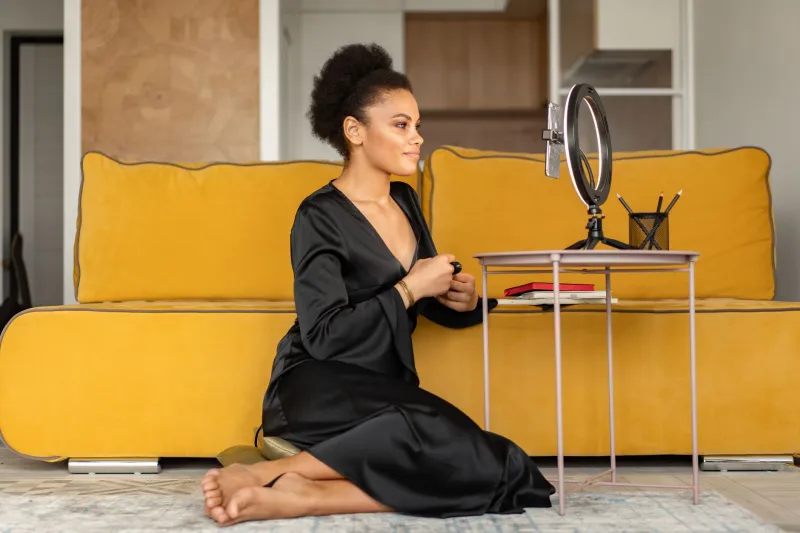
Same neutral color palette. Same jump cut at the three-second mark. Same "okay so" intro. Same ring light halo. Same vaguely aspirational bedroom setup with the exact same shelf of curated objects behind them. Different face, identical soul. Or rather: no soul. Just beige.
This is the content homogenization crisis that creators are whispering about and platforms are actively incentivizing, and it deserves a proper autopsy.
The Algorithm Is a Photocopier With Opinions
Here's the ugly machine behind the curtain: every major platform's recommendation engine is fundamentally a pattern-recognition system that rewards what already worked. It's not looking for genius. It's not looking for novelty. It's looking for familiarity dressed up as novelty — the creative equivalent of a knockoff handbag that's just different enough to avoid a lawsuit.
When a certain format blows up — say, the over-the-shoulder tutorial with warm earth tones and a trending sound — the algorithm logs that data and starts surfacing more of it. Creators notice what's getting pushed. Creators replicate the format. The algorithm rewards the replication. More creators replicate. Suddenly, you have an entire ecosystem of content that looks like it was produced by one extremely busy, deeply beige person.
"I tested it," says one mid-size beauty creator who asked to stay anonymous because, quote, 'I don't want to get buried any deeper than I already am.' "I spent six weeks making exactly the kind of content the algorithm seemed to want — specific aspect ratios, specific pacing, specific color grading. My views tripled. Then I made something I actually cared about. It got forty-two plays and a comment from my mom."
That's not a personal failure. That's a structural one.
The Beige Taxonomy: A Field Guide to What You're Actually Watching
For research purposes (and for the grim satisfaction of naming your enemies), here is a brief taxonomy of the beige content universe:
The Sage Green Kitchen Tour. She's renovating. She's calm. She has a $400 linen apron. The music is acoustic and vaguely sad. There are at least three cutting boards.
The Motivational Whisper. He's speaking quietly and directly into camera. The lighting is warm. He is going to tell you something that will change your life, and that thing is going to be extremely obvious.
The 'Day in My Life' That Is Actually an Ad. She wakes up. She makes matcha. She uses a product. She is thriving. She is definitely being paid.
The Reaction That Is Just a Face. He watched a thing. His face did something. This is the content.
None of this is any individual creator's fault. Every single one of them is just playing the game the platform designed. The problem is the game itself, which has decided that aesthetic conformity is the price of visibility.
What Happens to the Weird Kids
Ask anyone who built an audience before the algorithm got this aggressive, and they'll tell you the same thing: the stuff that made them was the stuff that shouldn't have worked.
The creators who went viral because they were genuinely strange, genuinely unpolished, genuinely themselves — they're now being asked to sand those edges off if they want to maintain their numbers. Some of them do it. Some of them don't.
"I had a moment where I realized I was editing myself to perform authenticity," says one comedy creator who's been on YouTube for nearly a decade. "Like, I was being authentic in a very specific, algorithm-approved way. My 'authentic' videos looked exactly like everyone else's 'authentic' videos. And I thought — okay, this is actually insane."
He started making deliberately weird stuff again. His subscriber growth slowed. His engagement from the people who stuck around got louder. He calls it a fair trade. His bank account disagrees.
This is the central cruelty of the beige machine: it punishes originality financially while rewarding it rhetorically. Every platform will tell you to "be yourself." Every platform's algorithm will then quietly suffocate you for doing exactly that.
The Irony Is Doing Backflips
Here's the part that really should be illegal: the platforms actively market themselves as homes for creative expression. TikTok's whole brand is built on the idea that anyone can blow up, that the weird kid gets a shot, that creativity wins. Instagram has spent years telling you that your authentic self is what the people want.
But the infrastructure those promises are built on actively selects against authenticity at scale. The algorithm cannot love a one-of-a-kind. It can only recognize a pattern. And if you're a one-of-a-kind, you either become a pattern or you become invisible.
Some creators are trying to fight back. There's a loosely organized movement — if you can call a few thousand burned-out content people quietly refusing to use trending sounds a movement — of creators who are deliberately making things that don't fit the format. Longer videos. Stranger thumbnails. Zero hooks. Just content that trusts the viewer to stick around without being manipulated into it.
Results are mixed. Some are finding smaller, more devoted audiences. Some are just finding smaller audiences.
The Burial Plot Is Beige Too
The end game of a fully homogenized content ecosystem isn't just boring. It's economically dangerous for creators and culturally catastrophic for the rest of us. When the algorithm becomes the only editor, the only things that survive are the things the algorithm can measure — and creativity, by definition, is the thing that hasn't been measured yet.
What we're watching, in real time, is an entire generation of creative voices being slowly beige-d into oblivion. Not cancelled. Not silenced. Just... averaged out. Sanded smooth. Made palatable and forgettable and safe.
The algorithm didn't kill creativity. It just put it in a very tasteful linen-colored box and told you the box was the point.
Scroll on. The next video looks exactly like this one.