Buffering Into the Void: When a Single Live Moment Turns a Creator's Career Into a Closed Casket Situation
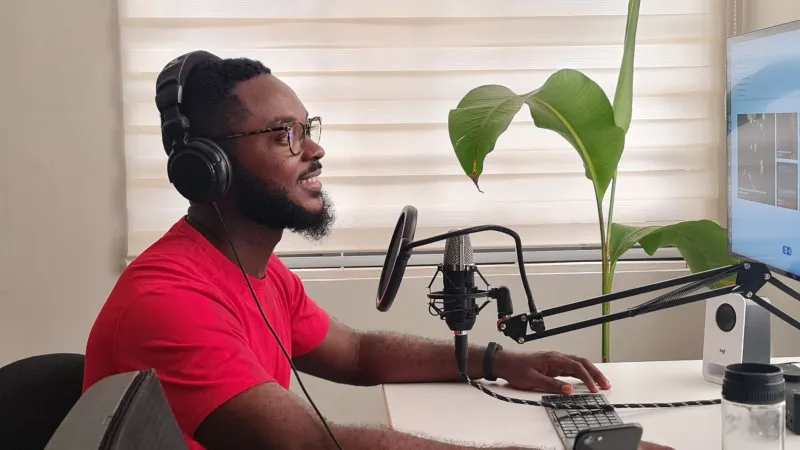
There is no editing suite between you and the audience. No second take. No publicist with a carefully worded statement ready before the footage even finishes uploading. When you go live, you are handing the internet a loaded gun and asking it to please, please point it somewhere else.
It almost never does.
The livestream was supposed to be the great democratizer of creator culture — raw, unfiltered, parasocial gold. And for a while, it worked beautifully. Audiences fell in love with creators precisely because live content felt real in a way that scripted YouTube videos never could. Then clip culture arrived and quietly rewired the entire equation. Suddenly, "real" wasn't a selling point. It was a liability.
The Thirty-Second Execution
Here's the math nobody warns you about when you hit that Go Live button: your audience's goodwill accumulates slowly, over months and years of consistent content, carefully managed parasocial relationships, and enough personality to make strangers feel like they know you. Their willingness to destroy that goodwill, however, operates on a completely different timeline.
Thirty seconds. Sometimes less.
A misconfigured screen share exposing private messages. A browser tab left open that absolutely should not have been. A Discord notification pinging at full volume with the wrong person's name attached. These aren't hypotheticals — they're a recurring genre of internet disaster with a dedicated audience that watches creator meltdowns the way previous generations watched NASCAR for the crashes.
The clip gets pulled within minutes. It gets posted to Reddit before the stream even ends. By morning, it's on Twitter, YouTube compilations, TikTok reaction videos, and at least one dedicated thread on a forum you've never heard of. The original creator can issue statements, delete VODs, go private, or simply disappear — none of it matters. The clip already has a longer shelf life than their entire catalog.
Platform Bans: The Mid-Broadcast Burial
If a technical disaster is a car accident, a platform ban mid-stream is a car accident where the road itself disappears underneath you.
Twitch has made an art form out of the mid-broadcast ban. One moment a creator is live to fifty thousand people, and the next, the channel simply ceases to exist in real time. No countdown. No warning. The stream cuts to offline, the community erupts in confusion, and the clips of whatever happened immediately before the ban become the most-watched content that creator will ever produce — just not in the way they intended.
The brutal irony is that a mid-stream ban is essentially free advertising for the worst moment of your career. The sudden absence creates urgency. People who weren't even watching tune in to find out what happened. The clip circulates with the kind of organic reach that PR firms charge six figures to manufacture, except the content is your professional obituary.
The Server Collapse Humiliation
Not every livestream death is dramatic. Some are just pathetic, and somehow those are worse.
Creators who build up to major live events — charity streams, game launches, big announcement shows — sometimes invest months of hype and audience energy into a single broadcast. Then the server crashes. The stream drops. The comeback attempt also crashes. The chat, which was supposed to be a celebration, becomes a roast. The clips that survive aren't of the triumphant moment the creator planned. They're of the creator staring blankly at a frozen screen while their audience watches them slowly realize that the universe has a sense of humor and it is not kind.
These moments are particularly brutal because they're nobody's fault in any satisfying way. There's no villain. There's no scandal. There's just a creator, a broken internet connection, and an audience that will absolutely never let them forget it.
Why Recovery Is a Fantasy the Industry Sells You
The standard advice after a livestream catastrophe follows a predictable script: take a break, issue a statement, come back with better content, and let time do its work. Platforms, fellow creators, and management teams all recite variations of this script with the confidence of people who have never actually watched clip culture operate in real time.
Here's what they're not telling you: time doesn't bury clips. It indexes them.
Every month that passes after a livestream disaster is another month for that clip to accumulate views, comments, and cross-platform references. The SEO around your name gets permanently associated with the incident. New followers who discover you through your recovery content will eventually find the original clip because the algorithm is not your therapist and it does not care about your healing journey. It cares about engagement, and nothing engages quite like watching someone's worst moment on loop.
Some creators do survive. The ones who make it through tend to have either an extraordinarily loyal pre-existing audience, a genuinely compelling narrative around the incident, or enough distance between the disaster and their core identity that the clip doesn't define them. But these are the exceptions, and the internet does not build its reputation on exceptions.
The Clip Is the Coffin
What makes livestream disasters uniquely lethal in the current creator landscape isn't the moment itself — it's the preservation. Television has had on-air disasters for decades. Anchors have said the wrong thing, guests have melted down, broadcasts have gone catastrophically sideways. Most of those moments faded. The infrastructure for immortalizing them didn't exist.
Now it does. And it's run by an audience that has developed a sophisticated, almost clinical appreciation for creator destruction. There are communities built entirely around cataloging these moments. There are YouTube channels with millions of subscribers dedicated to nothing but livestream fails. There is an entire economy of attention built on the wreckage of other people's worst professional experiences.
This isn't a moral judgment. It's just the landscape. The livestream was always a high-wire act, but creators used to perform it over a net. At some point while everyone was busy optimizing their streaming setups and chasing subscriber counts, someone quietly removed the net and replaced it with a camera pointed straight down.
Go live, they said. It'll be great for engagement.
And sure. Right up until it isn't.