Grief, Guilt, and the Unfollow Button: Mourning a Creator Who Never Knew You Existed
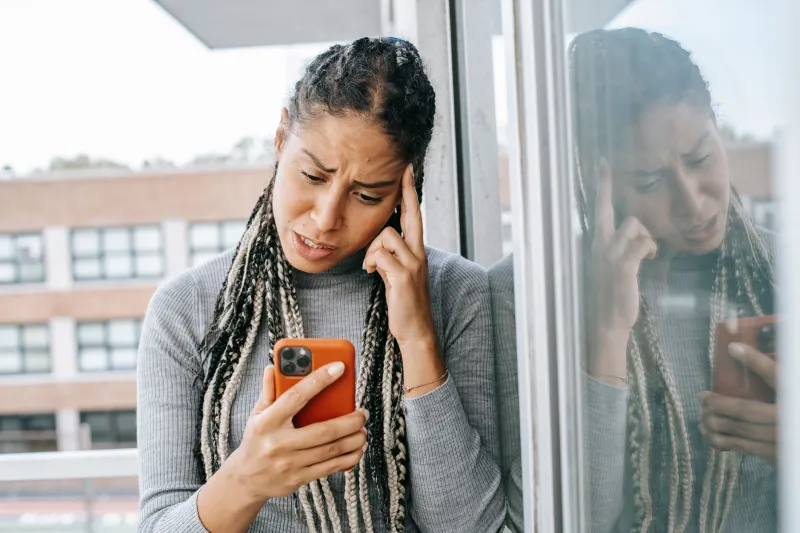
There's a very specific kind of emotional hangover that hits around 11:47 PM on a Tuesday when Twitter is actively eating someone alive. You're scrolling. You're reading. You're watching a person you've spent hundreds — maybe thousands — of hours with get dissected in real time by strangers with good receipts. And somewhere between the third screenshot thread and the creator's increasingly unhinged Notes app response, you realize you have to do it.
You have to unfollow.
Congratulatulations. You are now a mourner at a funeral for someone who does not know you are alive.
The Investment Nobody Warned You About
Here's the thing about parasocial relationships that the internet conveniently forgot to put in the terms and conditions: they cost something. Not money — something worse. Time, yes, but also trust. The slow, compounding kind that builds up when you watch someone eat breakfast on camera for four years. When you learn their dog's name. When you recognize the mug they always use. When their anxiety becomes background noise to your own anxiety, weirdly comforting in its familiarity.
Psychologists have been writing about parasocial attachment since the 1950s, originally in the context of television personalities. But what your average 1956 researcher could not have predicted is a world where the parasocial object of your affection posts seven times a day, responds to comments, goes live from their car, and cries about their divorce directly into your earbuds during your morning commute. The relationship has gotten denser. More textured. More convincing.
So when it blows up, the wreckage is proportionally catastrophic.
The Scandal Drop: A Precise Sequence of Events
Every creator scandal has the same basic architecture, and if you've been online long enough, you can clock each phase in real time like a birdwatcher identifying species.
First comes the vague tweet. Someone with 14,000 followers posts something cryptic about "accountability" and a creator whose name they conspicuously do not mention. Within forty minutes, the creator's name is mentioned. By hour two, there are receipts — DMs, screenshots, old videos resurfaced like bodies floating up after a flood. By hour six, the creator has either gone silent or posted something so catastrophically miscalculated that it becomes its own separate scandal.
And somewhere in that six-hour window, the fans are doing the math.
This is the part nobody talks about honestly: the negotiation that happens inside a fan's head before the unfollow. It is not clean. It is not righteous. It is a genuinely messy internal tribunal where you are simultaneously the prosecutor, the defense attorney, the jury, and the person whose parasocial investment is on the line. You are running calculations. How bad is it? Is it a pattern? Can it be contextualized? Do I have to throw away four years of emotional familiarity over this?
Sometimes the answer is no. Sometimes the scandal is survivable — a bad take, a clumsy apology, a moment of stupidity that doesn't define a pattern. Fans are, against all public evidence to the contrary, often capable of nuance.
But sometimes the answer is yes. And that's where it gets expensive.
What the Unfollow Actually Costs You
The button itself takes one second. The feelings take considerably longer.
Unfollowing a creator you've been attached to for years produces a genuinely strange emotional cocktail that has no clean cultural name. It's not grief, exactly, because nobody died. It's not a breakup, exactly, because there was no relationship. It's something in between — the loss of a version of your day that included this person, and the loss of the comfortable fiction that you knew them.
There's also guilt, which is the most inconvenient ingredient in the whole recipe. Guilt because you defended them. Guilt because you spent money on their merch, their Patreon, their tour tickets. Guilt because you feel, irrationally, like you are abandoning someone in a hard moment — even if that hard moment is of their own spectacular creation. The parasocial bond doesn't come with an asterisk that says this empathy expires upon bad behavior. Your nervous system did not get that memo.
And then there's the secondary social performance of it all. Because unfollowing in 2024 is never purely private. Someone will notice. Your mutuals are watching who's still defending the creator and who has quietly exited the building. The unfollow is a public statement made through absence, and in certain online communities, not unfollowing fast enough is its own indictment.
The Platform Makes It Worse, Obviously
Social media did not invent parasocial grief, but it has absolutely optimized it for maximum emotional throughput. Every platform has engineered features that deepen attachment — the algorithm that keeps serving you someone's content even after you've mentally checked out, the "memories" that resurface old videos at inopportune moments, the comment section that becomes a live split-screen of defenders and condemners screaming past each other.
YouTube will keep recommending their old videos for weeks. Spotify will keep playing their podcast in your queue. Instagram will surface their old posts in your Explore because the data says you engaged with them heavily and the data does not know about the scandal. The platforms are not equipped to process your emotional breakup. They only know you used to watch. They will keep handing you the ghost.
There's also something uniquely modern about being expected to perform your moral realignment in real time. Fans who don't unfollow fast enough get called out. Fans who unfollow but don't make a statement get called cowards. Fans who make a statement get accused of clout-chasing the drama. There is no correct speed at which to grieve a parasocial relationship publicly, and yet the internet will absolutely time you.
The Burial You Do Alone
What's almost never discussed is what happens after the unfollow. The quiet part. The part where you're watching TV three weeks later and something reminds you of a bit they did, and you almost pull up their channel before you remember. The muscle memory of a habit you've broken. The weird hollow space in your content rotation.
This is the actual funeral. Not the public statement, not the callout post, not the tweet explaining your decision. The funeral is the Tuesday afternoon when you reach for them and they're not there anymore — by your own choice — and you have to sit with the fact that you genuinely, sincerely miss someone who processed you as an analytics data point.
The internet has made us extraordinarily good at forming attachments and extraordinarily bad at processing their loss. We were handed all the tools to love strangers at scale and absolutely none of the tools to bury them cleanly.
So we do it messily. We do it publicly. We do it with guilt and grief and a low-grade resentment that we were ever dumb enough to care this much about someone whose real personality was always one leaked DM away from rearranging our entire Tuesday.
The unfollow button is right there. It's always been right there.
It just costs more than it looks like it should.