You're Paying for the Coffin and Calling It Entertainment: The Streaming Subscription Trap
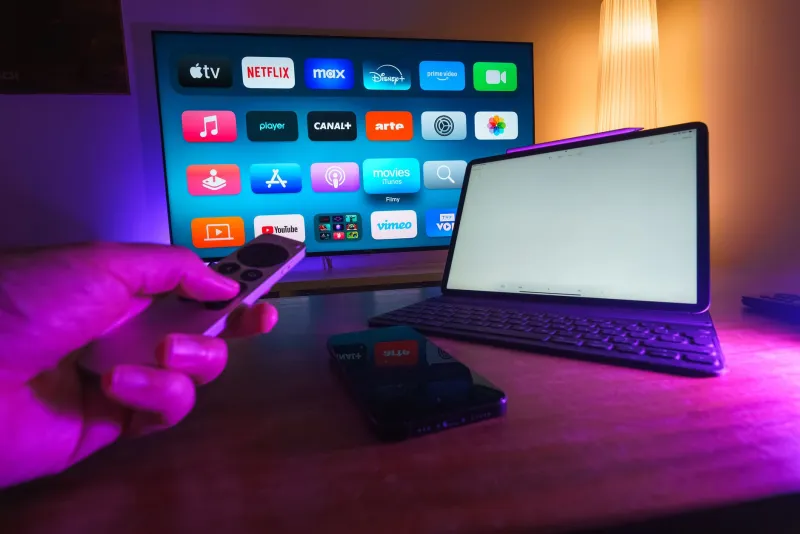
Let's do a quick exercise. Pull up your bank statement. Find every recurring charge from a streaming service. Add them up. Stare at that number for a moment. Now ask yourself: when did you last actually watch something on all of them?
Right. That's the subscription coffin. You're in it. You're paying rent on it. And the streaming platforms are charging you more every six months to make it slightly more uncomfortable.
This is the story of how the greatest entertainment revolution in a generation quietly became a graveyard — and how we all signed up for autopay on the tombstone.
The Promise vs. The Pile
Remember 2015? Netflix was a revelation. One flat fee, an enormous library, no commercials, and the occasional prestige original that people actually talked about at work. It felt like the future. It was the future.
Then every studio, every network, every IP-holding corporation looked at Netflix's subscriber numbers and had the same thought simultaneously: we want some of that.
What followed was the streaming wars — a content arms race that produced, by most estimates, more hours of original programming than any human being could watch in several lifetimes. Peacock launched. Paramount+ launched. HBO Max launched, got renamed, got merged, got confusing. Disney+ arrived with the full weight of every franchise you've ever loved and immediately started producing spinoffs of those franchises at a rate that suggested someone had lost a bet.
And you — loyal, hopeful, FOMO-poisoned American consumer — signed up for all of it.
The Price of the Dirt
Here's the financial autopsy, because somebody has to do it.
Netflix, which started at $7.99 a month, now runs up to $22.99 depending on your plan. Hulu with live TV is pushing $82.99. Disney+ has raised prices multiple times since launch. Max, HBO's increasingly identity-confused streaming home, has tiered itself into a pricing structure that requires a spreadsheet to understand. Apple TV+ is the most reasonable of the bunch, which is a sentence nobody expected to say about Apple.
Add up a modest streaming stack — Netflix, Hulu, Max, Disney+, maybe a Peacock because some sporting event forced your hand — and you're looking at $60 to $100 a month. That's $720 to $1,200 a year. For television. That you mostly have on in the background.
For comparison, a Netflix subscription in 2010 cost $8.99 and included DVD rentals. You could physically hold the content in your hands. Now you can't even download half of it for offline viewing without upgrading your plan.
The Mediocrity Industrial Complex
The pricing would be tolerable if the content justified it. It does not.
The streaming wars created an insatiable demand for original content — which sounds great until you realize that "original content" in practice means "a very large amount of shows, produced quickly, designed to generate press releases rather than cultural impact."
For every Succession, there are forty limited series about a true crime adjacent event that you watched two episodes of and then forgot existed. For every The Bear, there are sixty-something prestige-adjacent dramas that arrived, got a single round of think pieces, and dissolved back into the algorithm.
"Content" became the word the industry uses when it can't say "filler" in a press release. And filler is what's being produced at industrial scale, wrapped in expensive marketing, and served to you as the reason you're paying $17.99 a month.
Streaming platforms aren't in the business of making great television anymore. They're in the business of making enough television to justify keeping your credit card on file.
The Zombie Subscriptions
There's a specific category of streaming subscription that deserves its own clinical diagnosis: the zombie subscription. You signed up for it. You watched one thing on it. You forgot to cancel. It has been charging you for eleven months.
America is hemorrhaging money to zombie subscriptions at a scale that should be a national news story. A 2023 survey found that the average American underestimates their monthly subscription spending by nearly 200%. People think they're paying around $86 a month across all subscriptions. The actual number is closer to $219.
Paramount+ exists almost entirely as a zombie subscription. People signed up for Yellowstone or a specific NFL game and then just... kept paying. The platform's entire business model may be predicated on your inability to find the cancel button, which is buried approximately six menu layers deep and requires you to confirm your cancellation twice and then receive an email asking if you're sure.
They're not making it easy to leave. That's not an accident.
The Cannibalization Problem
Here's where it gets genuinely dark: the streaming model is eating itself.
To justify subscriber numbers, platforms need to spend on content. To spend on content, they need subscriber revenue. To grow subscriber revenue, they need to raise prices. When they raise prices, subscribers cancel. When subscribers cancel, the platform cuts content spending. When content spending gets cut, the shows get worse. When the shows get worse, more subscribers cancel.
We are watching this cycle play out in real time. Streaming services are cutting licensed content they already paid for (to reduce residual payments), canceling shows after one season regardless of audience response (to reduce production costs), and quietly degrading features — like download limits and simultaneous streams — to push users into higher-priced tiers.
The streaming revolution promised to give us everything. The streaming consolidation is slowly taking it back, piece by piece, and charging us more for the privilege of watching it disappear.
What You're Actually Buying
At this point, a streaming subscription is less of an entertainment product and more of a monthly donation to the concept of potentially watching something good eventually. You're not paying for content. You're paying for access to the possibility of content, most of which will be mediocre, some of which will be cancelled before you finish it, and all of which will cost you more next year than it does today.
The subscription coffin is real, it's comfortable, and it has very good ambient lighting. You'll keep paying for it. We all will.
The remote's right there. Something's probably on.