Scroll to the Bottom of Your Own Grave: How Instagram Buried Every Aesthetic You Ever Loved
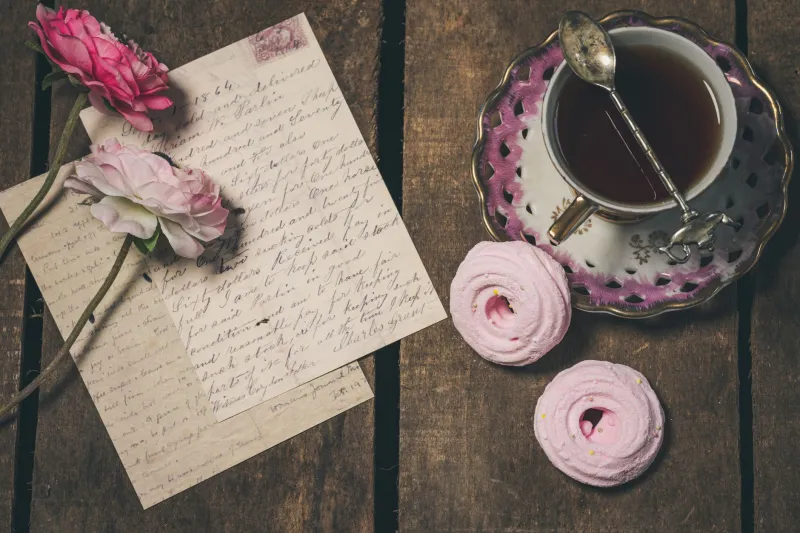
Somewhere in your Instagram archive, there's a photo of you standing in a field wearing a linen dress, holding a wicker basket, squinting at the sun like you were auditioning for a Laura Ingalls Wilder biopic nobody asked for. The caption probably said something about "slow mornings" and "sourdough." You used fourteen hashtags. You got 47 likes. You felt, briefly, like you were part of something.
You were. And then Instagram killed it. Quietly. Efficiently. Without so much as a sympathy card.
The Instagram Aesthetic Graveyard is not a metaphor. It is a real, sprawling, digital cemetery where entire visual movements — movements that real people built with real time, real creativity, and real emotional investment — go to decompose in chronological obscurity while the algorithm shovels dirt on top and serves you a sponsored post for a water bottle.
The Algorithm Didn't Just Change the Feed. It Changed the Rules Mid-Game.
Let's establish cause of death before we start the autopsy. In 2016, Instagram quietly murdered the chronological feed and replaced it with an algorithmic one. The stated reason was noble-sounding: show people the content they'd engage with most. The actual result was a slow, grinding extinction event for any creator or community that didn't immediately pivot to whatever behavior the algorithm rewarded that week.
Cottagecore didn't die because people stopped caring about mushrooms and hand-stitched aprons. It died because the algorithm stopped surfacing it to the people who loved it. Dark academia — all those candles, worn paperbacks, and melancholy playlists — didn't collapse because Gen Z suddenly became optimistic. It got buried under an avalanche of Reels from people who'd never heard of Donna Tartt. Indie sleaze, that glorious, chaotic resurrection of early-2000s flash photography and cigarette-outside-the-bar energy, got exactly eighteen months of oxygen before the platform decided video content was the only content that mattered.
Each of these aesthetics had a life cycle. The algorithm just made that life cycle shorter, meaner, and completely out of the creators' hands.
The Ghosts Still Posting
Here's the part that genuinely haunts us at Dump Bodies: the creators didn't always leave. Some of them are still there. Haunting their own archives. Posting into the void with the quiet desperation of someone yelling into a well and waiting for an echo that stopped coming years ago.
You know the accounts. They peaked in 2020 or 2021, during that specific pandemic-era window when Instagram aesthetics hit a kind of cultural critical mass — everyone stuck at home, everyone suddenly very interested in making their immediate environment look like a Pinterest board. Those creators got thousands of followers. Their engagement was real. The community they built had actual texture: comments that were full sentences, DMs from strangers who became genuine friends, a shared visual language that felt like belonging.
Now those same accounts post the same content to an audience that's technically still there but functionally gone. The followers didn't leave. They just stopped seeing the posts. The algorithm decided the account wasn't performing and quietly pulled it off the stage. The creator is still talking. The room is just empty.
That's not a metaphor for burnout. That's a structural betrayal baked into the platform's business model.
Scrolling as Archaeology
If you want to understand what Instagram actually did to aesthetic communities, try this: go to your own profile and scroll down. Not just a little. Really scroll. Go back two, three, four years. What you're doing isn't nostalgia browsing. It's fieldwork.
You'll find evidence of entire identities you inhabited and then abandoned — not because you outgrew them organically, but because the platform stopped rewarding them. That carefully curated color palette you maintained for eight months? Dead. That community of accounts you cross-posted with, commented on, built something with? Scattered. Some of them deleted their accounts. Some pivoted to TikTok. Some are still there, ghosting through their own grids, posting for an algorithm that has already decided they're irrelevant.
The really brutal thing is that Instagram didn't just bury the trends. It buried the evidence that the trends ever mattered. The archive exists, technically, but it's invisible. The algorithm doesn't surface old content. There's no discovery mechanism for depth. The platform is structurally optimized for the new, the fast, and the immediately engaging — which means anything that required patience, community-building, or a sustained aesthetic vision is effectively dead on arrival the moment the cycle turns.
The Pivot or Perish Industrial Complex
And then came Reels. Oh, Reels. Instagram's desperate, humiliating attempt to become TikTok without any of TikTok's actual culture. The platform didn't just add a new feature — it weaponized it. Accounts that refused to post video content got algorithmically throttled. Creators who'd spent years perfecting still photography, who'd built entire visual identities around the careful composition of a single frame, were suddenly told that their entire skill set was worth less than a thirty-second clip of someone pointing at text.
The pivot-or-perish mandate hit aesthetic communities especially hard, because most of them were built around a fundamentally still visual language. Dark academia is a photograph of a desk. Cottagecore is a flat lay of herbs. Indie sleaze is a grainy flash shot at 2 a.m. None of these things translate naturally to video. The creators who tried to force the translation mostly just looked awkward. The ones who refused got buried.
Either way, Instagram won. It always wins. That's the business model.
What We Actually Lost
Look, we're not going to pretend that cottagecore was high art or that the world is measurably worse without a steady supply of flat lays featuring dried lavender and vintage teacups. We're not eulogizing the aesthetics themselves. We're eulogizing the communities.
Because here's what actually got buried in that algorithmic shift: the weird, specific, niche groups of people who found each other through shared visual obsessions. The dark academia kids who were genuinely lonely and found a community that made them feel less so. The cottagecore creators who were processing anxiety by fantasizing about simpler lives and happened to find ten thousand other people doing the exact same thing. The indie sleaze revivalists who were trying to connect with a pre-smartphone cultural moment they'd missed and built something new out of the pieces.
Those connections were real. The platform that hosted them decided they weren't profitable enough and quietly turned off the lights.
Scrolling through the Instagram Aesthetic Graveyard isn't just an exercise in cringe-at-your-past-self entertainment, though it is definitely that. It's a reminder that every community you build on someone else's platform is a community built on borrowed land. The landlord can change the lease whenever it's convenient. The bodies stay in the ground.
The algorithm doesn't mourn. It just recommends.