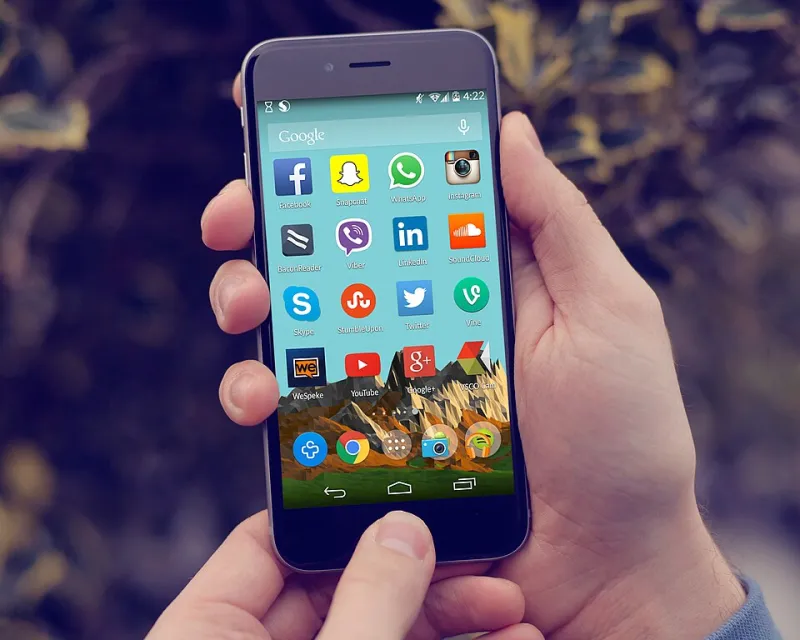
Swipe Left on Forever: Why Gen Z Keeps Burning Down Every Platform They Build Their Life On
Photo: President (1993-2001 : Clinton). White House Photograph Office. 1/20/1993-1/20/2001, Public domain, via Wikimedia Commons
Every few years, a new social media platform shows up at the door with flowers and a pitch deck, promising to be different. Authentic. Real. This one won't sell your data to the highest bidder. This one won't bury your posts under a pay-to-play algorithm. This one is built for connection, not engagement metrics. Gen Z opens the door, lets it in, decorates the entire house around it — and then burns the house down about 18 months later and moves to the next address.
This is not a bug. This is the feature.
The TikTok Honeymoon and the Morning After
TikTok's rise is the kind of story that should be taught in marketing schools — and probably is, right next to the chapter on how to ruin it. When the app exploded in the US around 2019-2020, it felt genuinely revolutionary. The algorithm didn't care who you were. A kid in rural Ohio with zero followers could post a video on a Tuesday and wake up famous on Wednesday. The playing field felt, for one shining moment, actually level.
Gen Z didn't just use TikTok. They built entire creative economies on it. Sounds became culture. Dances became résumés. Niche communities — BookTok, WitchTok, CottageCoreTok — carved out corners of the internet that felt weirdly safe and specific in a way that Facebook groups never managed.
Then the brands showed up. Then the celebrities colonized it. Then the algorithm, which had once felt like a benevolent chaos engine, started showing its teeth — favoring certain creators, burying others, rewarding content that performed well in ways that felt increasingly manufactured. The authentic-feeling thing started feeling like a performance of authenticity, which is somehow worse than just being fake from the start.
And then the US government started talking about banning it. Which, regardless of where you land politically, introduced a new variable into the Gen Z calculus: why build here if the landlord might condemn the building?
Instagram: The Platform That Became Its Own Cautionary Tale
Instagram is what happens when a platform successfully kills its competitor by becoming its competitor. When TikTok started eating Instagram's lunch in the early 2020s, Meta's response was to slap a Reels-shaped bandage on a platform that had spent a decade training users to expect something entirely different.
The original Instagram pitch — beautiful photos, curated aesthetics, aspirational living — already had a well-documented toxicity problem. Study after study linked heavy Instagram use to anxiety, body image issues, and a specific kind of FOMO that felt clinical in its precision. Gen Z wasn't unaware of this. They were vocal about it. And yet they stayed, because everyone was there and leaving meant social exile.
Reels changed the texture without changing the culture. Suddenly Instagram was trying to be TikTok while still being Instagram, which meant it was doing neither particularly well. Creators complained that their photo content was being suppressed in favor of video. Longtime users mourned the chronological feed. Everyone agreed the algorithm had become hostile, and Meta's response was essentially a shrug dressed up in a press release.
Instagram isn't dead — it's too big to die quickly. But it's become the platform Gen Z uses because they have to, not because they want to. There's a difference, and the difference is everything.
BeReal: The Beautiful Disaster That Was Honest About Being Temporary
Bless BeReal's heart. The concept was genuinely compelling: once a day, at a random time, everyone gets a two-minute window to post an unfiltered photo using both cameras simultaneously. No filters. No do-overs. No performance. Just you, whatever you're doing, right now.
For about six months in 2022, it worked. It scratched an itch that Instagram and TikTok had created — the craving for something that felt real in a feed full of content that had been lit, edited, and optimized within an inch of its life. Gen Z adopted it with genuine enthusiasm. The memes were good. The concept was sound.
Then two things happened. First, people started gaming it — waiting for a "good" moment to open the app, taking multiple shots in the two-minute window, essentially performing spontaneity. The inauthenticity that BeReal was designed to escape followed it home like a stray cat. Second, and more fatally, there was nothing else to do on the platform. No discovery. No algorithm to surface new people. No community-building tools. It was a single clever idea without an ecosystem around it.
By 2023, daily active users had cratered. BeReal had been honest about one thing without realizing it: it showed us exactly how quickly a platform can become a ghost town when the novelty wears off and there's no engagement engine keeping the lights on.
The Migration Pattern: What Gen Z Is Actually Doing
Here's what the platform obituaries miss: Gen Z isn't abandoning social media. They're diversifying their graves. The generation that grew up watching MySpace die and Facebook become their parents' problem has internalized a very specific lesson — never put all your audience in one algorithm's hands.
The savvier Gen Z creators maintain presences across TikTok, Instagram, YouTube Shorts, and Twitch simultaneously, treating each platform as a distribution channel rather than a home. Discord servers serve as actual community infrastructure. Substack newsletters and Patreon pages are the bunkers — owned channels that no algorithm can touch.
This isn't platform loyalty. It's platform literacy. And it's completely rational given what they've watched happen.
Meanwhile, the platforms themselves are locked in a feature-copying arms race so aggressive it's become self-parody. Instagram copies TikTok. TikTok adds photo carousels to compete with Instagram. YouTube Shorts exists because TikTok exists. Snapchat adds a feature every six months hoping something sticks. Everyone is chasing everyone else, and the result is a landscape where every platform is starting to look and feel identical — which means the switching cost of leaving any one of them is basically zero.
The Next Platform Is Already Dead
Whatever launches next — and something always launches next — arrives with an expiration date already stamped on the bottom. Not because the idea will necessarily be bad. But because the cycle is now so well-understood, so thoroughly documented, that audiences have essentially internalized the timeline.
Phase one: Discovery and euphoria. Phase two: Mainstream adoption and brand colonization. Phase three: Algorithm changes that favor revenue over users. Phase four: Nostalgia for the early days while still using the platform out of inertia. Phase five: The next thing.
Gen Z didn't create this cycle. They just run it faster than any generation before them because they've had more practice. They've already watched three or four platforms go from revolutionary to irrelevant within their own lifetimes.
The Uncomfortable Truth
The platforms aren't dying because Gen Z is fickle. They're dying because they're designed to extract value from users rather than deliver it to them — and Gen Z is the first generation with enough digital fluency to recognize that exchange for what it is and keep moving.
Every platform promises authenticity and delivers an algorithm. Every algorithm promises connection and delivers content. Every piece of content is, eventually, an ad for something.
And when you've seen the trick enough times, the magician stops being impressive.
So yeah. The next big platform is already on its way. It will feel different. It will feel real. Gen Z will show up, build something beautiful, watch the brands arrive, and start quietly packing their bags.
The grave is already dug. They're just waiting for the platform to climb in.